

Are the eggs we eat unborn chicks? How can we know if an egg is fertilized?
A look at the chick's development steps.
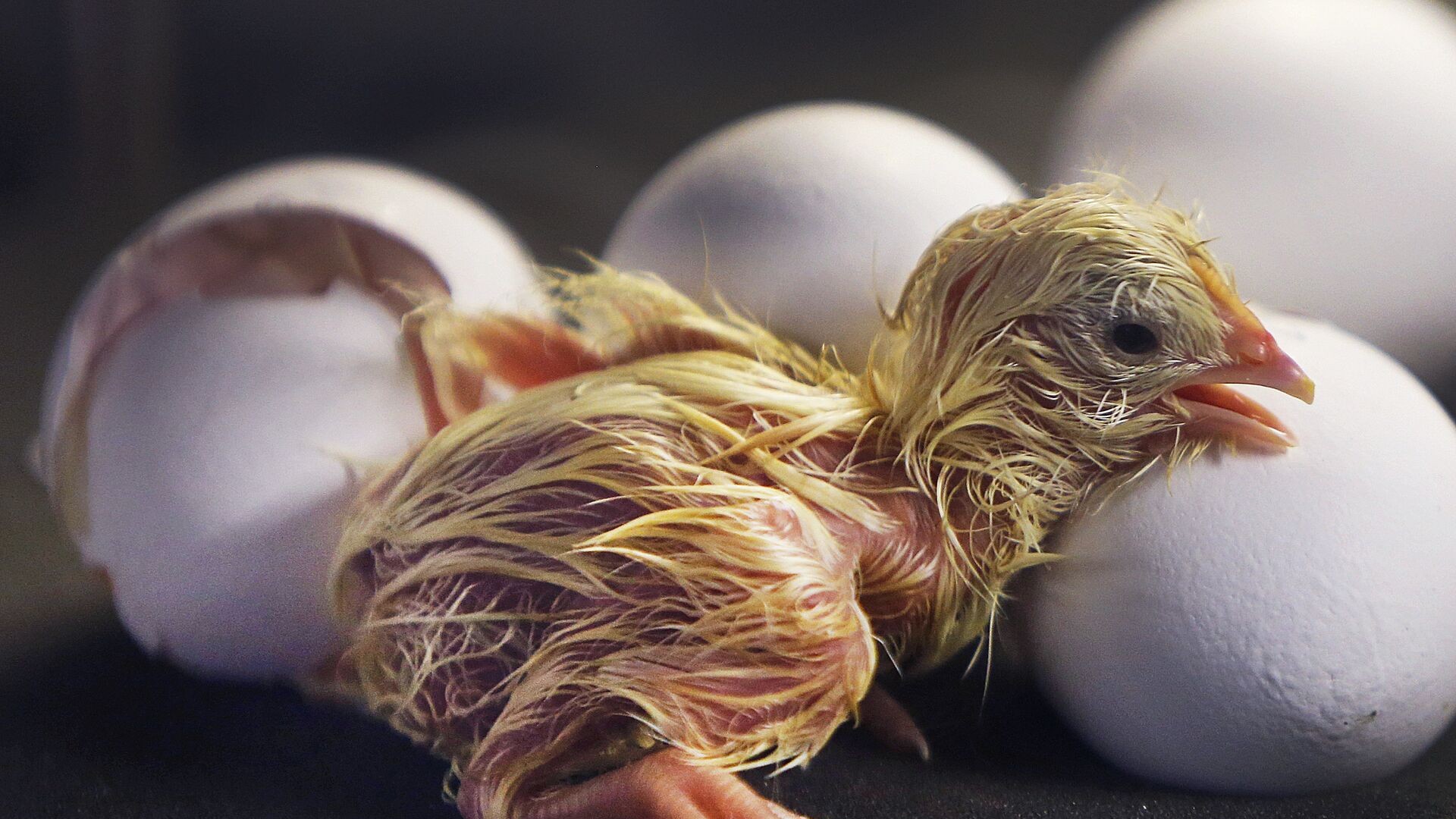
- Blog Yazısı
Blog Yazısı
No, the eggs we eat are not fertilised. At least probably not. If you buy your eggs from a market, the possibility of eating a fertilized egg is zero. Because egg farms don't have roosters. However, if you buy them from the street, village, etc. since those eggs could be coming from chickens that are living with roosters; even though it's a small chance there still is a possibility of those eggs being fertilized.
The first thing we should understand is that female of the bird Gallus gallus domesticus's (also known as chicken) egg production takes approximately 25.5 hours. Therefore, a chicken produces about 420 eggs during a laying period of 630 days. (You can think of it as one egg in two days.)
This egg produced, is the reproductive cell of the chicken. Whether the egg is fertilized or not, it is still produced and discarded by the chicken with all its contents including the shell, just like a female human discards an egg once a month.
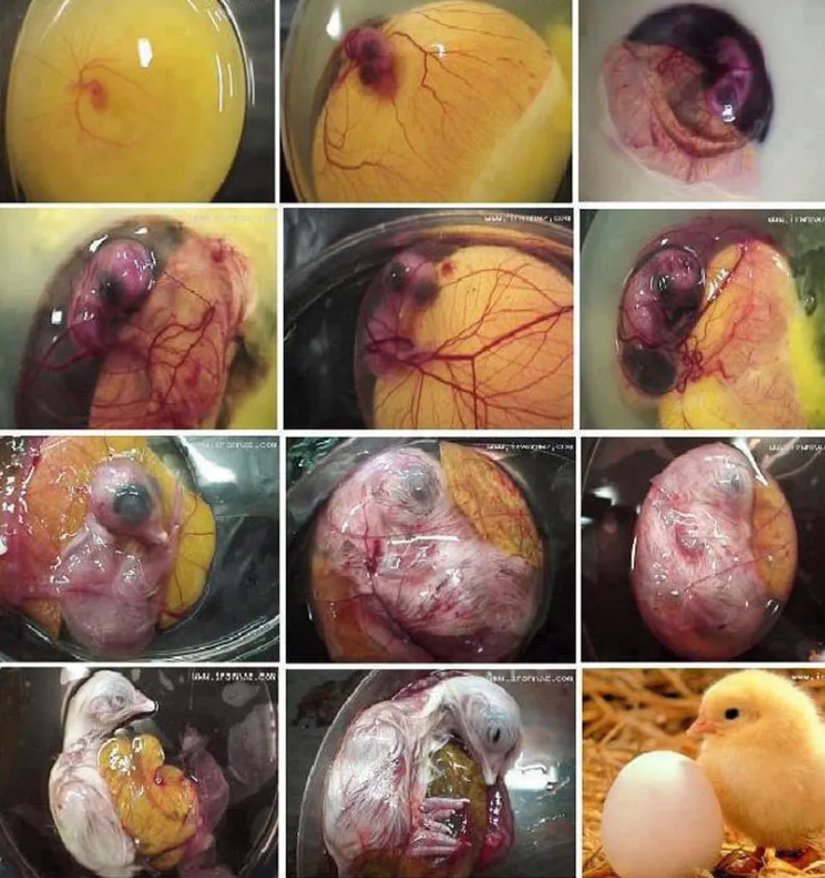
However, there are two differences between humans and chickens. The first one is that chickens ovulate more often than female humans. The second one is that chickens' eggs are thousands of times bigger than humans'. Well, we also don't eat human eggs.
Since the chicken egg is quite large, it can be misinterpreted as this large of an egg can only be a production of fertilization. Nevertheless, a chicken egg can be fertilized or unfertilized. The ones that are sold in supermarkets are not, but if you have kept chickens or roosters in the village, the eggs produced by your chicken may have been fertilized by a rooster.
Can we differentiate a fertilized egg?
Unfortunately, this is very difficult. However, if we use a little biology knowledge, we can at least have a general idea.
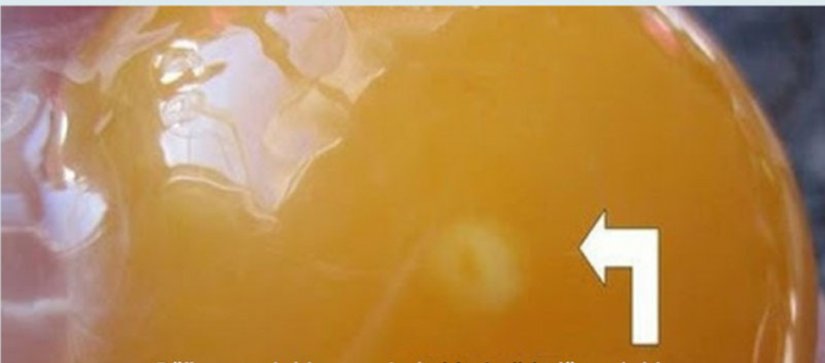
Inside of unfertilized egg's yolk, there is a white dot that is not in a regular structure. If it is not in regular rings, it is called a blastodisc and remains that way if the egg doesn't get fertilized.
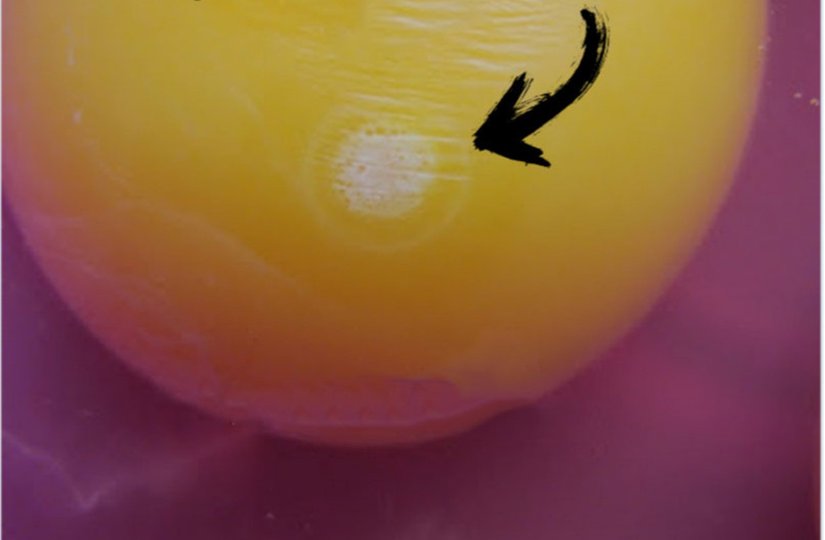
If a chicken is fertilized by a rooster, the egg's general appearance would look the same. However, the white dot in the yolk would be more evident and rounder. This is called blastoderm.
However, a chicken's egg being fertilized, in other words, the formation of blastoderm doesn't have a meaning by itself. If the chicken doesn't incubate, the embryo would never develop. While the temperatures above 25 Celsius degrees are suitable for the development, in temperatures below 10 Celsius degrees the development completely stops. During the incubation period, most birds keep their eggs in the temperatures in the range of 36.4-38 degrees Celsius. As long as the temperature is maintained, the development continues. Therefore, the hatching process is indispensable for chick formation.
Thus even the eggs you buy from a village, unless you take them right under a chicken, wouldn't be developed even though it is fertilized because it wouldn't have the necessary temperature parameter.
Long story short, we can almost say with certainty that the eggs you eat will not contain embryos. There's a very high chance that the egg you eat will never be fertilized from the start. In short, there is no difference between a sunflower seed and a bird's egg. Both are reproductive cells that have not yet participated in embryo production.
- Çeviri Kaynağı: Evrim Ağacı | Arşiv Bağlantısı
- Tebrikler!1

- Bilim Budur!1

- Mmm... Çok sapyoseksüel!1

- Muhteşem!0

- Güldürdü0

- İnanılmaz0

- Umut Verici!0

- Merak Uyandırıcı!0

- Üzücü!0

- Grrr... *@$#0

- İğrenç!0

- Korkutucu!0

Evrim Ağacı'na her ay sadece 1 kahve ısmarlayarak destek olmak ister misin?
Şu iki siteden biriyle hemen destek olabilirsin:
kreosus.com/evrimagaci | patreon.com/evrimagaci
Çıktı Bilgisi: Bu sayfa, Evrim Ağacı yazdırma aracıyla 24.11.2026 11:30:39 tarihinde oluşturuldu. Evrim Ağacı'ndaki içerikleri birden fazla editör sürekli gözden geçiriyor, güncelliyor ve geliştiriyor. Bu çıktıdan sonraki güncellemeleri görmek ve içeriğin en güncel hâlini okumak için şu adrese git: evrimagaci.org/s/12224
İçerik Kullanım İzinleri: Evrim Ağacı'ndaki yazılı içerikler orijinallerine hiçbir şekilde dokunulmadığı sürece izin alınmaksızın paylaşılabilir, kopyalanabilir, yapıştırılabilir, çoğaltılabilir, basılabilir, dağıtılabilir, yayılabilir, alıntılanabilir. Ancak bu içeriklerin hiçbiri izin alınmaksızın değiştirilemez ve değiştirilmiş hâlleri Evrim Ağacı'na aitmiş gibi sunulamaz. Benzer şekilde, içeriklerin hiçbiri, söz konusu içeriğin açıkça belirtilmiş yazarlarından ve Evrim Ağacı'ndan başkasına aitmiş gibi sunulamaz.
Yorumlar 0