On the volatile frontier separating Pakistan and Afghanistan, a new wave of violence erupted in October 2025, shattering relative calm and thrusting the region’s longstanding border disputes and militant threats back into the global spotlight. What began as a series of deadly clashes along the Durand Line on October 11 quickly escalated into days of fierce fighting, with both nations trading accusations, artillery fire, and diplomatic barbs—all while civilians and border communities bore the brunt of the fallout.
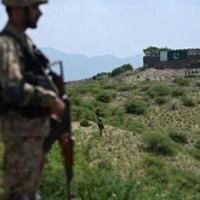
According to Reuters, Pakistani troops were placed on high alert after the weekend’s violence left dozens dead, the most severe escalation in recent years. Pakistan reported 23 soldiers killed and 29 injured, while the Afghan Taliban claimed to have killed 58 Pakistani soldiers. The Taliban, for their part, admitted to losing nine fighters and nearly 18 wounded. Neither side’s casualty claims could be independently verified, but the scale and intensity of the fighting were clear: artillery, tanks, and infantry units were deployed along the 2,600-kilometer border, and Afghan forces reportedly seized three Pakistani border posts in Kunar and Helmand provinces.
The immediate trigger for this round of conflict is hotly contested. Pakistan accuses Taliban militants of initiating the attacks, while Afghan officials point to Pakistani airstrikes—including those in Kabul and eastern Afghanistan earlier in the week—as the real provocation. The Taliban government in Kabul has repeatedly denied harboring militants who target Pakistan, insisting that “war is not a solution to problems. There is a need for dialogue. This has been our policy,” as Afghan Foreign Minister Amir Khan Muttaqi told reporters in New Delhi, according to Reuters. Yet, Pakistan’s military claims to have neutralized over 200 Afghan Taliban fighters and allied militants in the recent clashes, underscoring the scale of the confrontation.
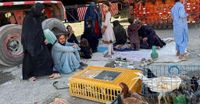
The violence has had immediate and severe consequences for daily life along the border. Pakistan closed its key crossings at Torkham and Chaman, effectively halting all trade and movement. As The Straits Times and Reuters reported, this closure stranded scores of trucks and containers loaded with fresh fruit, vegetables, and other goods on both sides. “Loaded vehicles, including containers and trucks, are stuck on both sides of the border,” said Zia Ul Haq Sarhadi, vice-president of the Pak-Afghan Joint Chamber of Commerce and Industry. “Besides fresh fruit and vegetables, they are carrying imports and exports and transit trade goods and causing millions of rupees of losses to the two countries as well as traders.” For landlocked Afghanistan, which relies on Pakistan as its main source of goods and food supplies, the disruption has been particularly acute.
Beyond the immediate economic pain, the fighting has reignited deep-seated mistrust and exposed the fragility of peace efforts along a frontier shaped by colonial history and ethnic ties. The Durand Line, drawn by the British in the late 19th century, remains unrecognized by Afghanistan as an official border. This ambiguity has long complicated governance and security cooperation, giving militant groups space to operate and evade authorities. The return of the Taliban to power in Kabul in 2021 added a new layer of uncertainty, with Islamabad’s relationship with the new regime oscillating between wary cooperation and outright suspicion.
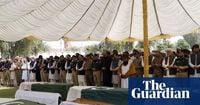
Violence and instability have become grimly familiar for those living in Pakistan’s northwest, particularly in Khyber Pakhtunkhwa. There, the resurgence of the Tehreek-e-Taliban Pakistan (TTP)—ideologically aligned with, but distinct from, the Afghan Taliban—has brought terror back to the streets. As The Guardian detailed, police officers like Tariq Ahmed now live in constant fear, their colleagues targeted by assassinations and suicide bombings. “Pakistani Taliban are present in every village around here now,” Ahmed said. “It seems they have a network of spies or informants who can tell them about local police who take part in raids on their camps.”
The TTP’s campaign has intensified dramatically since the Taliban’s return to power next door. According to the Armed Conflict Location & Event Data Project, more than 600 TTP attacks have been recorded this year alone—the worst in a decade. The Center for Research and Security Studies in Pakistan reported a staggering 75% rise in militant violence over the past three months. Attacks have ranged from suicide bombings on army convoys to storming police headquarters and targeting civilians. In North Waziristan and other border districts, militants roam openly, extorting businesses and imposing their own rule. “It is an environment of terror here and we are living in fear,” a local mine owner told The Guardian, describing how he was forced to shutter his business after being unable to pay off Taliban demands.
Pakistan’s government lays the blame for the TTP’s resurgence squarely on the Taliban regime in Kabul, accusing them of providing safe havens, financial support, and even releasing militants from prisons. A United Nations report last year supported some of these claims, noting that the Taliban had given aid packages and a monthly stipend to the TTP’s leader, Noor Wali Mehsud. “The rise in TTP attacks coincides almost perfectly with the Taliban coming to power,” explained Pearl Pandya, a senior analyst for Acled, to The Guardian. “They’ve turned a blind eye to the new TTP training camps and they released hundreds of TTP militants from prisons, many of whom have found their way back into Pakistan.”
The Afghan Taliban, however, vehemently denies any involvement with the TTP. “There are no safe havens of TTP in Afghanistan,” insisted Foreign Minister Muttaqi. Meanwhile, Pakistani officials like Muhammad Ali Saif, adviser to the chief minister of Khyber Pakhtunkhwa, warn that the militants are now better equipped than ever, using night-vision goggles, sniper weapons, and drones left behind by US forces. “The technology and sophisticated weapons available to the militants has changed everything,” said Saif. He cautioned against large-scale military operations, arguing that such tactics only deepen mistrust and fuel sympathy for militants among the local population. Instead, Saif advocates for improved dialogue with the Afghan Taliban—though he claims such efforts have been blocked by Pakistan’s central government.
The international community is watching with growing concern. Qatar and Saudi Arabia have urged restraint, prompting Kabul to announce a temporary pause in military operations to reduce tensions. China, which borders both countries, has offered to play a “constructive role” in improving Pakistan-Afghanistan relations, while former US President Donald Trump even weighed in, telling reporters, “I hear there’s a war now going on between Pakistan and Afghanistan. I said, I’ll have to wait till I get back. You know, I’m doing another one, because I’m good at solving wars, I’m good at making peace.”
For border communities caught between warring states and emboldened militants, peace remains elusive. As the cycle of violence and retaliation continues, the need for meaningful dialogue, trust-building, and international mediation grows ever more urgent. Without it, the Durand Line will remain not just a disputed boundary, but a fault line of suffering and instability for years to come.