Bolivia, a nation perched high in the Andes and long considered a bastion of leftist politics in South America, is on the cusp of a historic political transformation. After more than two decades of dominance by the Movement Toward Socialism (MAS) party, the country’s presidential election on August 17, 2025, has set the stage for an unprecedented runoff between a centrist and a right-wing contender. The outcome could not only reshape Bolivia’s internal political landscape but also reverberate far beyond its borders, altering alliances and economic strategies in a time of acute crisis.
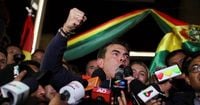
With over 91% of ballots counted, Senator Rodrigo Paz, a centrist and former mayor, emerged as the surprise frontrunner, securing 32.8% of the vote. He will face off on October 19 against Jorge "Tuto" Quiroga, a right-wing former president, who finished second with 26.4%. According to the Associated Press, this is the first time since Bolivia’s return to democracy in 1982—and since adopting its current constitution in 2009—that no candidate has managed to clear the threshold required to win outright. To avoid a runoff, a candidate needed to win more than 50% of the vote or at least 40% with a 10-point lead over the nearest rival. Neither came close.
The runoff, scheduled for October 19, is unprecedented and signals a seismic shift in Bolivian politics. For nearly 20 years, the MAS party—founded by the charismatic and controversial Evo Morales—held sway over the nation’s political and economic direction. Morales, who swept into office in 2006 on a wave of support from Indigenous and working-class Bolivians, reoriented the country away from U.S.-backed neoliberalism, expanded social programs, and forged close ties with countries like Venezuela, China, Russia, and Iran. But the party’s grip on power has now been shattered by infighting, economic turmoil, and the ignominious exit of its founder.
Morales himself was barred from running by a constitutional court ruling on term limits and is currently evading an arrest warrant related to allegations of sexual relations with a minor. He has spent months holed up in his stronghold of Chapare, urging his supporters to cast null or blank votes in protest at his exclusion. His loyalists apparently heeded the call: 19% of ballots were deemed invalid, a figure far higher than the usual 6%, according to reports from the Associated Press and Newsweek. The official MAS candidate, Eduardo del Castillo, finished a distant sixth with just 3.2% of the vote, while Senate president Andrónico Rodríguez, once considered the party’s best hope, garnered only 8%.
The economic context has been nothing short of dire. Bolivia is facing its worst financial crisis in four decades. Annual inflation has soared from just 2% less than two years ago to over 16%—and some sources, including the Associated Press, put it as high as 25% as of July 2025. Fuel shortages have paralyzed transportation, and a desperate lack of U.S. dollars for essential imports like wheat has only deepened the pain. The collapse of the natural gas industry, long a pillar of the economy, has left the country with dwindling currency reserves and a public desperate for change.
“The economy is a disaster right now, so all I could bring myself to do was vote for change,” said Eileen Mirabal, a 30-year-old psychologist, in remarks captured by the Associated Press. For many, the vote was less about ideological loyalty and more about a search for stability and hope amid chaos. Ronaldo Olorio, a former Morales supporter, put it bluntly: “People were waiting for a new, popular candidate, and in this, the opposition failed us. My vote is one of anger, of discontent.”
The opposition, long fragmented and often tainted by associations with unpopular neoliberal policies of the 1990s and early 2000s, finally found an opening as MAS imploded. Yet even now, Bolivians remain wary of a sharp turn to the right. Rodrigo Paz has positioned himself as a moderate, seeking to distance his campaign from the tough austerity measures championed by Quiroga and business tycoon Samuel Doria Medina, who finished third after being projected as a frontrunner in pre-election polls. Paz has also criticized plans to sell off the country’s vast lithium reserves to foreign companies and to seek loans from the International Monetary Fund, moves that evoke painful memories for many Bolivians.
But Paz is no political neophyte. The 57-year-old lawmaker is the son of former President Jaime Paz Zamora, who himself straddled the ideological spectrum—beginning as a leftist before striking alliances with right-wing parties to secure power in the late 1980s. According to Le Monde and the Associated Press, Paz’s career has included stints with right-wing parties, and his critics argue that his rise represents not so much a break from the past as a return to the traditional political elite. “What we’re doing is moving back in time,” observed Kathryn Ledebur, director of the Andean Information Network. “This is not a new actor with dynamic policies. He’s a surrogate for the reconstruction of the traditional right.”
Quiroga, for his part, congratulated Paz on his lead, telling supporters, “What happened is unprecedented. Bolivia told the world that we want to live in a free nation.” Both he and Doria Medina have pledged to attract foreign investment and restore diplomatic ties with the United States, ruptured in 2008 when Morales expelled the American ambassador. Yet their promises of austerity and privatization have failed to ignite widespread enthusiasm.
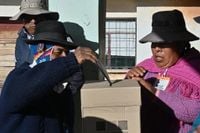
Sunday’s election was not without its tensions. In Chapare, a dynamite stick exploded near a polling station where Rodríguez was scheduled to vote, and he was later assaulted by pro-Morales crowds as he cast his ballot. Despite these flare-ups, authorities reported that voting largely proceeded peacefully across the country.
The sense of uncertainty is palpable. About 30% of voters were still undecided in the days leading up to the election, according to Le Monde. Many Bolivians, like 38-year-old Jaqueline Cachaca, are simply looking for fresh faces and new ideas. “We want new people, new proposals, another chance for young people,” she told the Associated Press, reflecting a widespread yearning for renewal amid economic despair.
As the October runoff approaches, the stakes could not be higher. A victory for Paz or Quiroga would mark a definitive end to the MAS era and set Bolivia on a new, uncertain course—one that could see the country pivot back toward the United States and the global financial system, or perhaps find a uniquely Bolivian path through its current turmoil. For now, the only certainty is that change is coming, and Bolivians are bracing for whatever comes next.